
Duke Energy’s Political Spending
Duke Energy Carolinas and Duke Energy Progress, the two branches of Duke Energy in North Carolina, are required to file their expenses to the Federal Energy Regulatory Commission every year. In these reports, we have identified five categories of spending that may support its political influence:
- Regulatory Commission Expenses – expenses for participating in regulatory hearings in front of bodies like the North Carolina Utilities Commission. These hearings decide upon everything from changing energy rates to building new power plants.
- General Advertising Expenses – expenses for advertising that bolsters the company’s image, such as radio and television ads boasting about its commitment to renewable energy and the public benefit. Such advertising paints a favorable image of electric monopolies to the public and thus our elected officials. In the words of NC WARN and Friends of the Earth, “Why should a monopoly be permitted to expend a substantial amount of customers’ money to advertise, when there is no competition?”
- Charitable Donations – contributions to various charitable organizations that bolster the company’s image. While we support charitable giving, these donations are often used to generate sympathy and public comment in favor of electric monopoly agendas. Duke Energy has been guilty of pushing an anti-solar agenda among churches in North Carolina that receive charitable donations.
- Civic and Political Expenses – expenses that are directly political, such as lobbying, campaign contributions, and independent expenditures. These are used to send mailers in important districts and pay lobbyists.
- Industry Association Dues – membership dues paid to industry associations like Edison Electric Institute who spend much of their budget on policy research and advocacy. Industry associations that Duke participates in include:
- American Gas Association
- Association of Corporate Citizenship Professionals
- Business Roundtable
- Center for Climate and Energy Solutions
- Consortium for Energy Efficiency
- Corporate Eco Forum
- Edison Electric Institute
- Electric Power Research Institute
- Electric Utility Industry Sustainable Supply Chain Alliance
- National Wild Turkey Federation
- Midwest Energy Efficiency Alliance
- Southeast Energy Efficiency Alliance
- SustainAbility Transparency Network
- Zero Emission Transportation Association
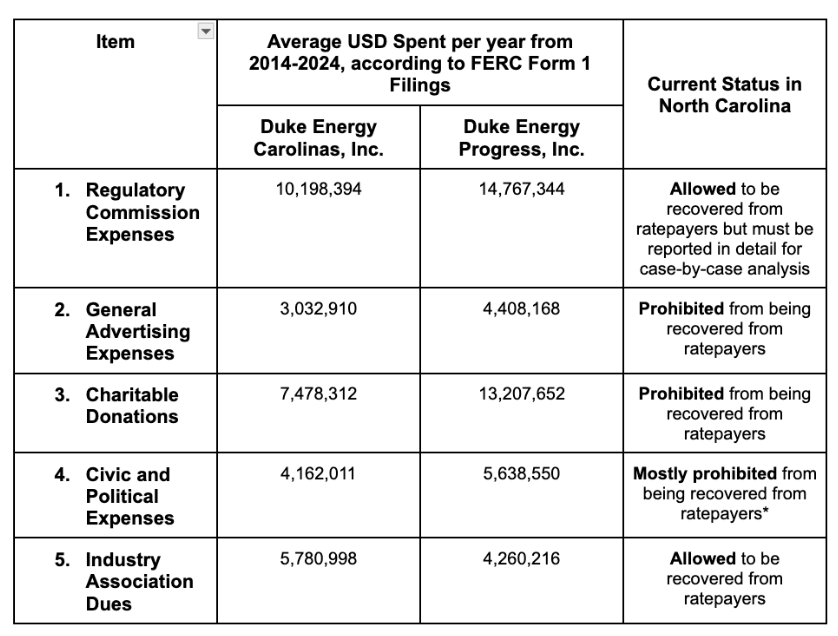
*Political contributions and most lobbying costs are prohibited from recovery. Exceptions include lobbying regarding “initiatives deemed beneficial to the public interest, such as crafting the state’s Clean Energy Plan.”